

Featured Tickers: AMZN, GOOGL, META, MSFT, ORCL
With early voting in the midterm elections already underway in certain states, this month’s charts of interest starts with a look at both the presidential cycle and stock market returns under unified and divided governments. We then pivot to the artificial intelligence (AI) build-out, which has contributed to the rise in bond yields. We end with a snapshot of consumer spending: dining out.
As a reminder, the charts of interest highlight charts and tables I’ve come across that haven’t made their way into other AAII commentaries.
The Sweet Spot of the Presidential Cycle
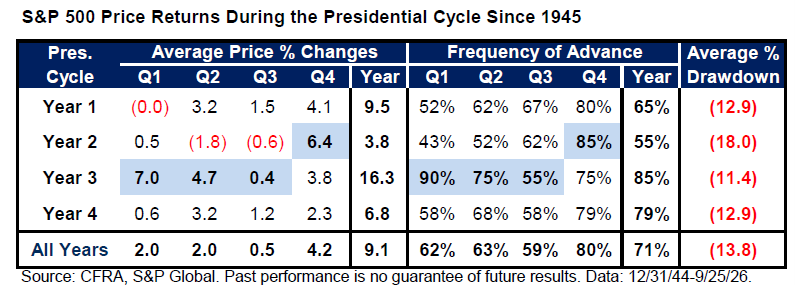
The S&P 500 index has tended to follow a recurring pattern during a president’s term, with its strongest performance occurring after midterm elections. This pattern is often attributed to the president taking steps to boost the economy ahead of the next general election. The chart below from Sam Stovall of CFRA Research illustrates this trend.
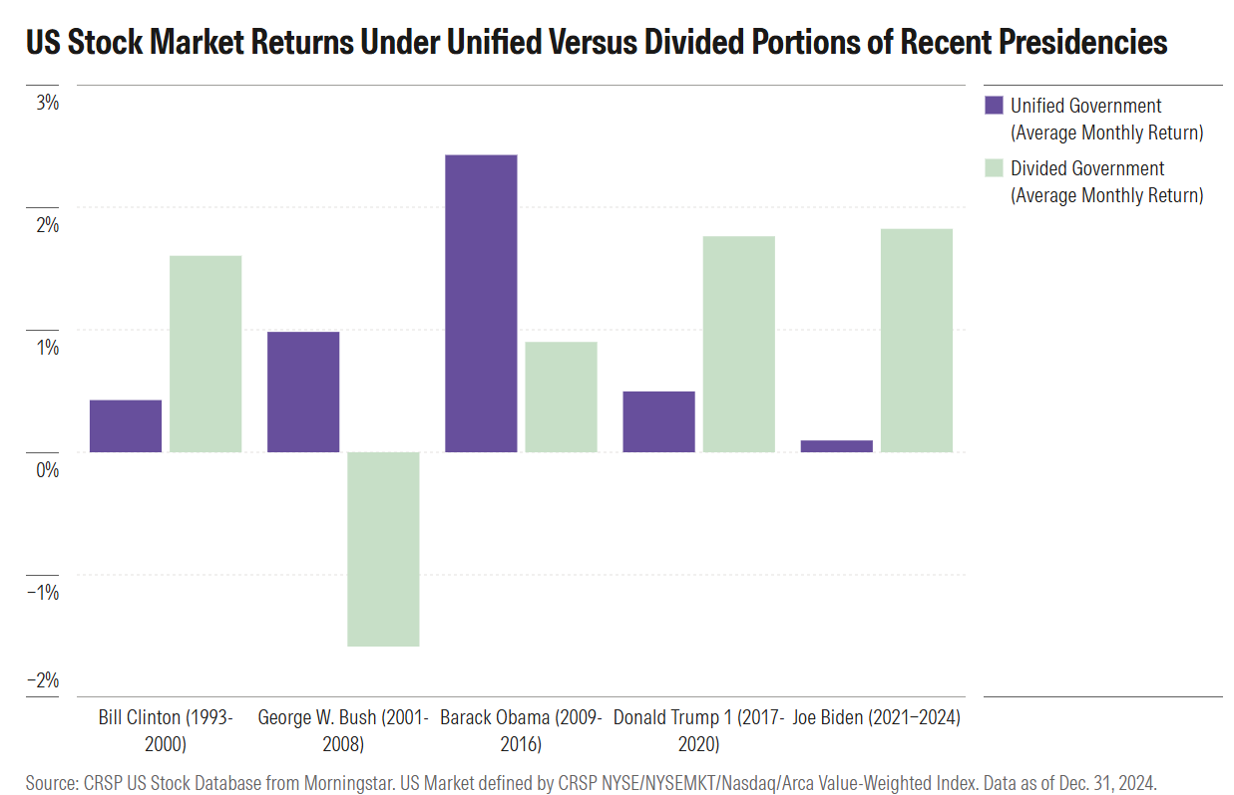
More recent data paints an inconclusive picture about whether having a divided government is good for the stock market. Morningstar looked at the data from the start of former President Bill Clinton’s first term in 1993 to the end of former President Joe Biden’s term in 2024. It found the average monthly returns to be nearly the same between periods with a unified government (one party in charge) and a divided government (one party in the White House and another party controlling at least one chamber of Congress). Keep in mind that these numbers are based on a small sample size.
More Cash Needed for the AI Build-Out
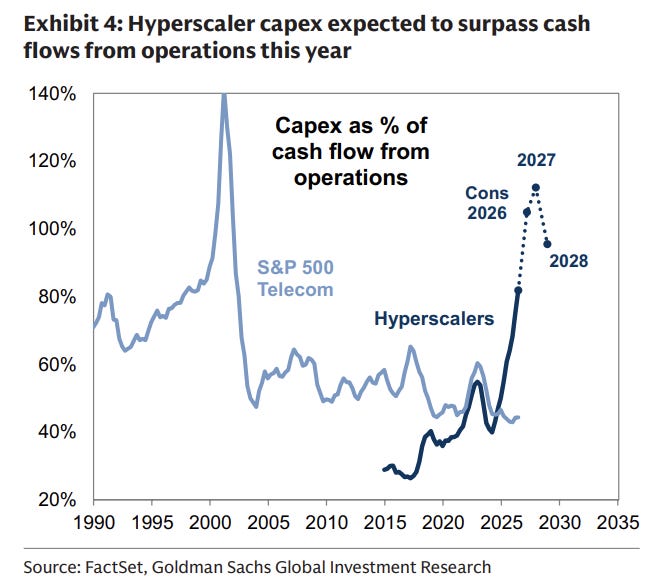
Spending on the AI build-out by hyperscalers is projected to far exceed their cash flow from operations this year, next year and into at least 2028, according to Goldman Sachs. This build-out will require more capital—meaning more new debt and secondary offerings of stock. New bond issuances will have the potential to keep interest rates high.
Goldman Sachs identifies the following companies as being among the hyperscalers: Amazon.com Inc. (AMZN), Alphabet Inc. (GOOGL), Meta Platforms Inc. (META), Microsoft Corp. (MSFT) and Oracle Corp. (ORCL).
Credit Spreads Are Rising for Technology Debt
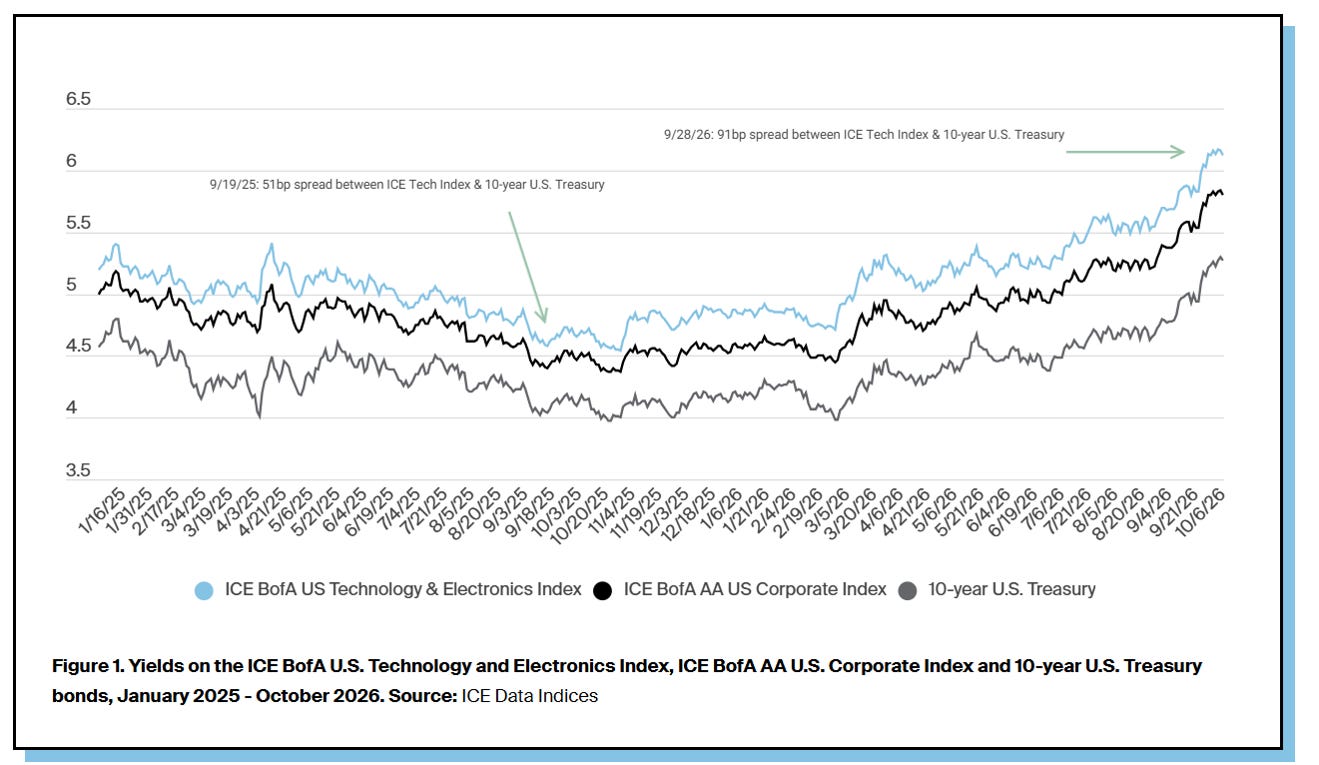
Investors are demanding a higher premium to hold investment-grade debt issued by AI hyperscalers and semiconductor companies. That premium—the extra yield over U.S. Treasury bonds—is widening. The ICE BofA U.S. Technology and Electronics index shows investors demanding nearly a full percentage point more in yield (91 basis points) relative to 10-year Treasury bonds. “That spread also appears to be widening: [It] was just 51 basis points in September 2025,” noted Chris Edmonds of Intercontinental Exchange Inc.
Muni Bond Yields Have Gotten Juicy
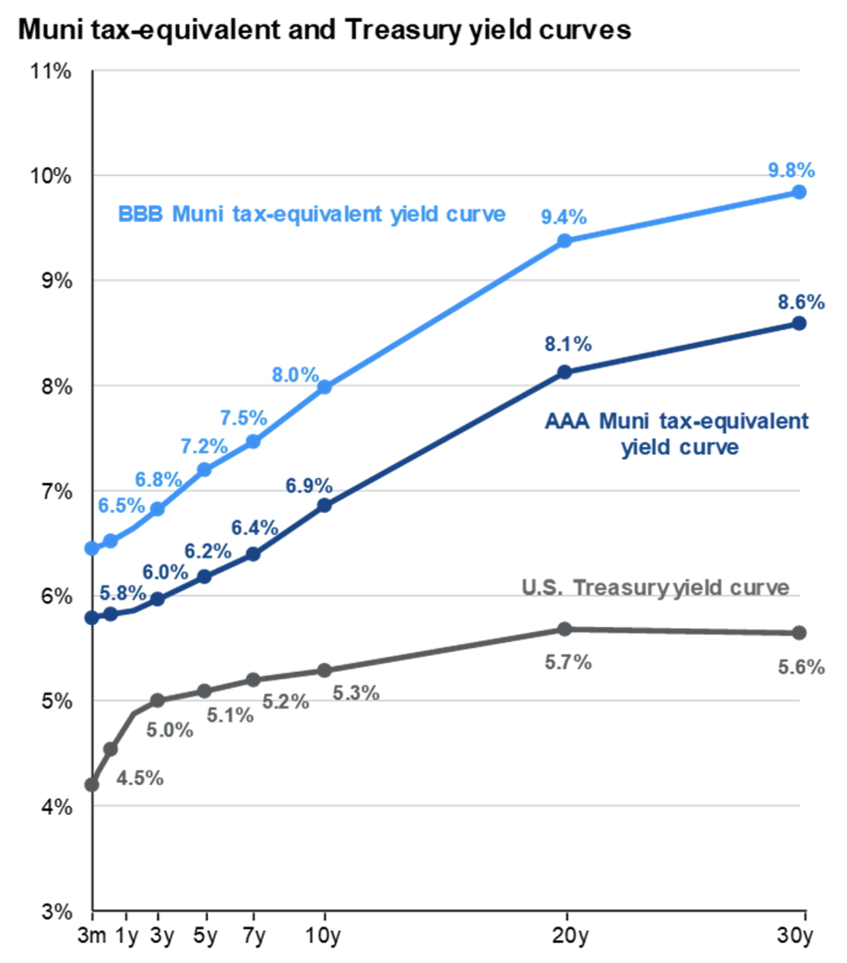
Tax-equivalent yields on AAA-rated municipal bonds ended September with yields ranging from 6.0% for three-year notes to over 8.0% for 20- and 30-year bonds. BBB-rated muni bonds have yields ranging from 6.8% to over 9.0% for comparable maturities.
JPMorgan Asset Management used a 40.8% tax rate (37% federal income tax bracket plus the net investment income tax of 3.8%) to calculate the tax-equivalent yield. Depending on your tax bracket, the tax-equivalent yield could be less.
The tax-equivalent yield is calculated as: Yield ÷ (1 – Tax Rate). So, today’s 4.24% yield on three-year muni notes equates to a tax-equivalent yield of 7.2% for someone subject to the combined 40.8% tax rate.
Source: JPMorgan Asset Management. Data as of 9/30/2026.
Fewer Americans Are Dining Out Each Week
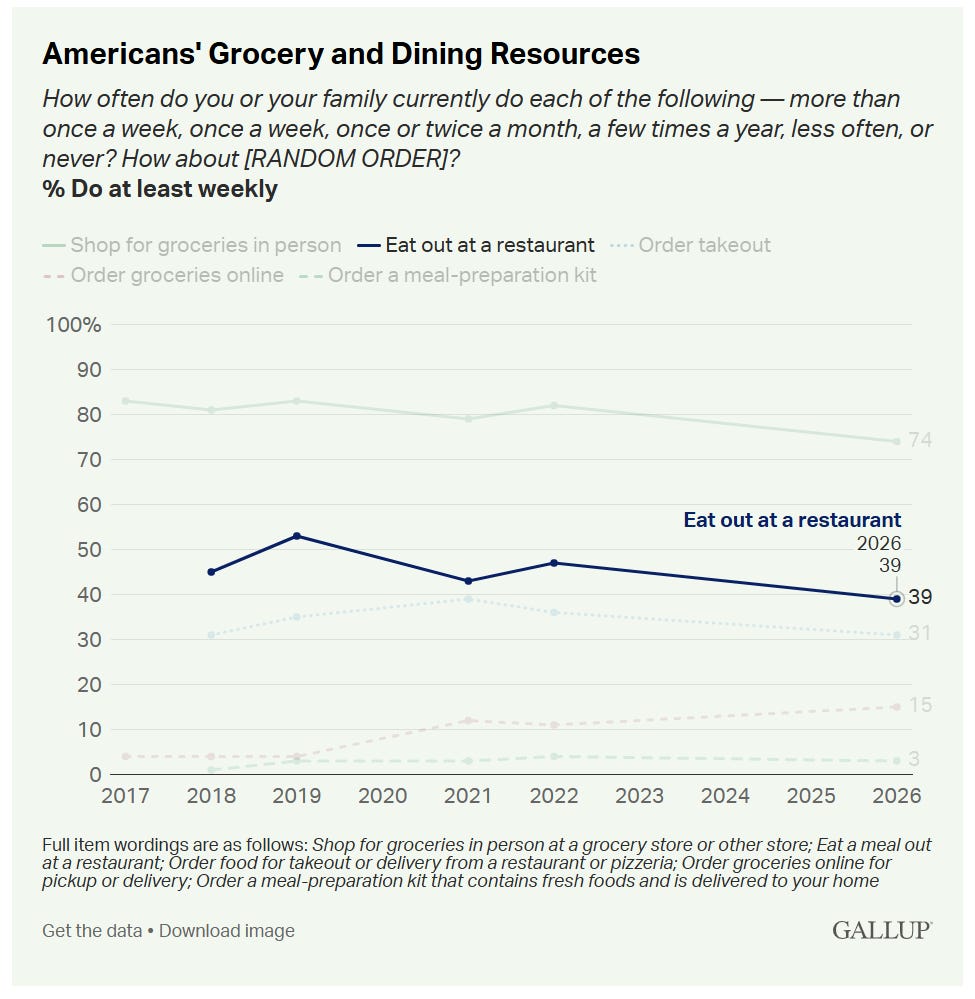
The percentage of Americans who dine out at least once per week has fallen to 39%. Not only is this down from the post-pandemic rebound of 47% in 2022, it is “a new low in Gallup’s trend and well below the closest pre-pandemic reading of 53% in 2019.”
The decline is being driven mostly by middle- and upper-income groups.
Source: Gallup.

More on AAII.com
The Relationship Between a President’s Party Affiliation and Stock Market Returns
Why we tend to elect Democratic presidents in times of trouble and Republican presidents in good times.Calculating the Tax-Equivalent Yield of Muni Bonds
The quoted yield on a municipal bond may be understated relative to that of a similar corporate bond once taxes are factored in. A simple formula lets you determine which yield is more attractive.Growth Without Growing Pains: Where to Find Sustainably Growing Stocks
Find out how the AAII Growth Investing strategy looks for consistent growth backed by financial strength in a stock, in the October 2026 AAII Journal.AAII Sentiment Survey
Pessimism among individual investors about the short-term outlook for stocks increased in the latest AAII Sentiment Survey. Meanwhile, optimism and neutral sentiment decreased.
Bullish sentiment, expectations that stock prices will rise over the next six months, decreased 1.9 percentage points to 36.9%. Bullish sentiment is below its historical average of 37.5% for the fourth time in six weeks.
Neutral sentiment, expectations that stock prices will stay essentially unchanged over the next six months, decreased 2.3 percentage points to 17.3%. Neutral sentiment is unusually low and is below its historical average of 31.0% for the 33rd consecutive week.
Bearish sentiment, expectations that stock prices will fall over the next six months, increased 4.2 percentage points to 45.8%. Bearish sentiment is unusually high and is above its historical average of 31.5% for the 37th consecutive week.
The bull-bear spread (bullish minus bearish sentiment) decreased 6.0 percentage points to –8.9%. The bull-bear spread is below its historical average of 6.5% for the 14th consecutive week.
This week’s special question asked AAII members what impact inflation is having on their portfolio decisions.
Here is how they responded:
It is not impacting my portfolio decisions: 33.6%
It is having a small, but not significant, impact: 32.0%
It is making me more cautious: 32.8%
Not sure/no opinion: 1.6%
This week’s Sentiment Survey results:
Bullish: 36.9%, down 1.9 points
Neutral: 17.3%, down 2.3 points
Bearish: 45.8%, up 4.2 points
Historical averages:
Bullish: 37.5%
Neutral: 31.0%
Bearish: 31.5%