

Greetings from chilly Chicago—brrr! This year’s first charts of interest starts with a look at the current yield environment for stocks and bonds. We then go global with international stocks, before moving onto gold, the U.S. dollar and, since it’s cold outside, cocoa.
A New Low for Stock Yields
The stock market’s dividend yield has fallen below 1%. The large influence of technology-related stocks on the market is a major contributing factor. Share buybacks are also playing a role, though companies continue to grow their dividends.
Income-seeking investors should adjust their expectations for what a reasonable yield is accordingly. What was once a typical yield is now a high yield. High yields signal high perceived risk.
It is still very possible to do better than the market’s yield though. Our Dividend Investing (DI) portfolio, which seeks dividend growth stocks, yielded 2.4% at the end of 2025.
The chart below shows the monthly yields for the iShares Dow Jones U.S. ETF (IYY), which is a broad market-weighted exchange-traded fund (ETF).
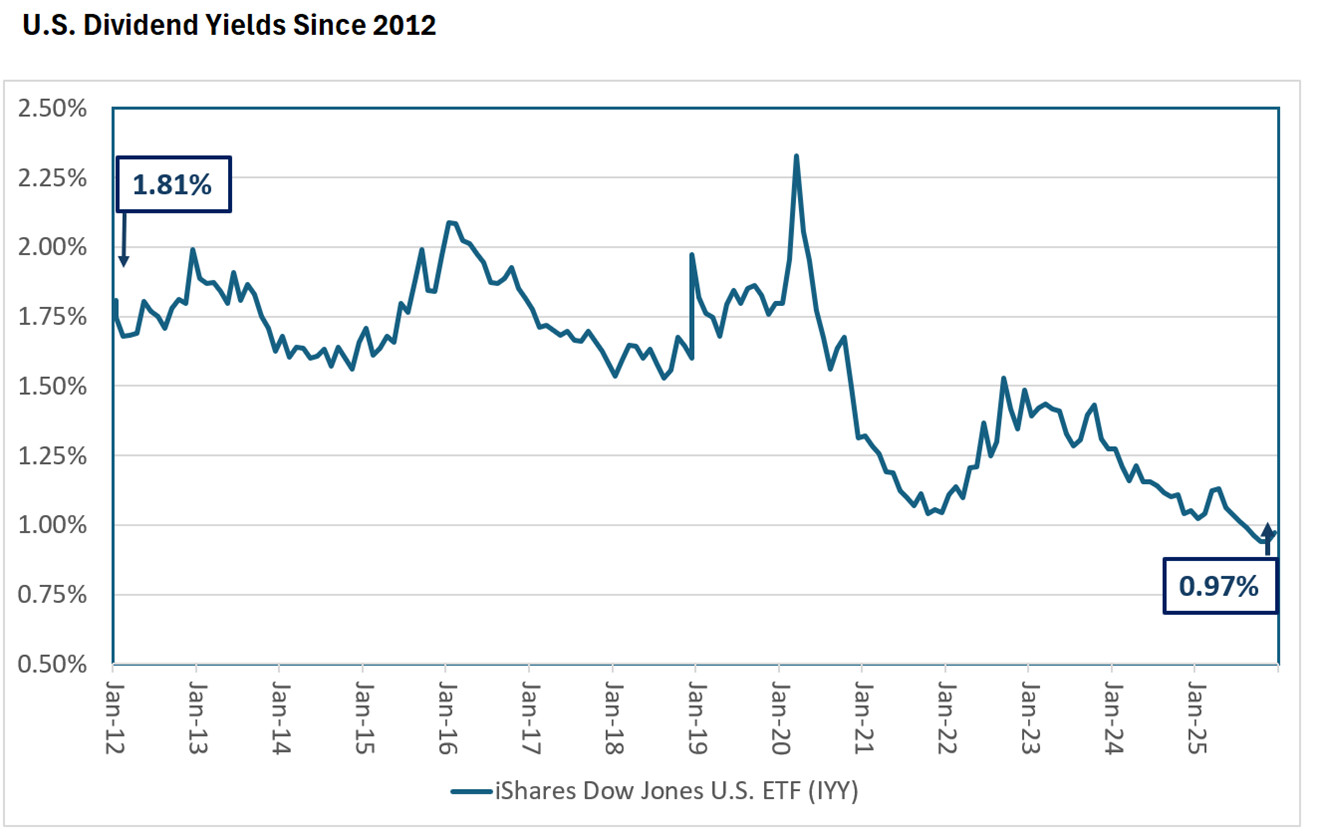
Source: QuoteMedia, BlackRock and AAII. Data as of 12/31/2025.
Bond Land Remains “Risk On”
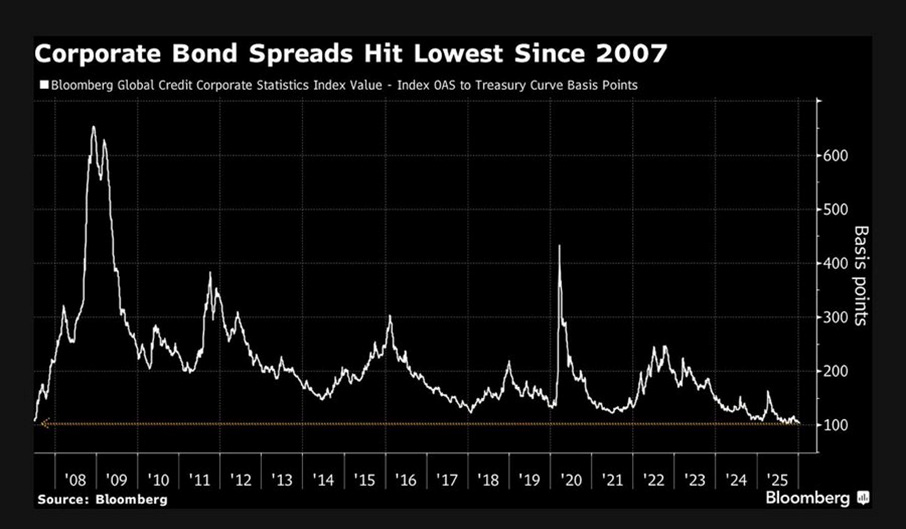
Last week, yield spreads narrowed to just 103 basis points (1.03%). Bloomberg, which Wharton School professor Mohamed A. El-Erian quoted when tweeting the chart below, described the spread between investment-grade and high-yield (“junk”) bond yields as being the narrowest since June 2007.
The narrower the spread in yields, the less you are compensated for taking on extra risk. Narrow spreads can signal optimism about economic conditions and/or a lack of worry about a bad event occurring in the foreseeable future.
International Stocks Outperformed Last Year
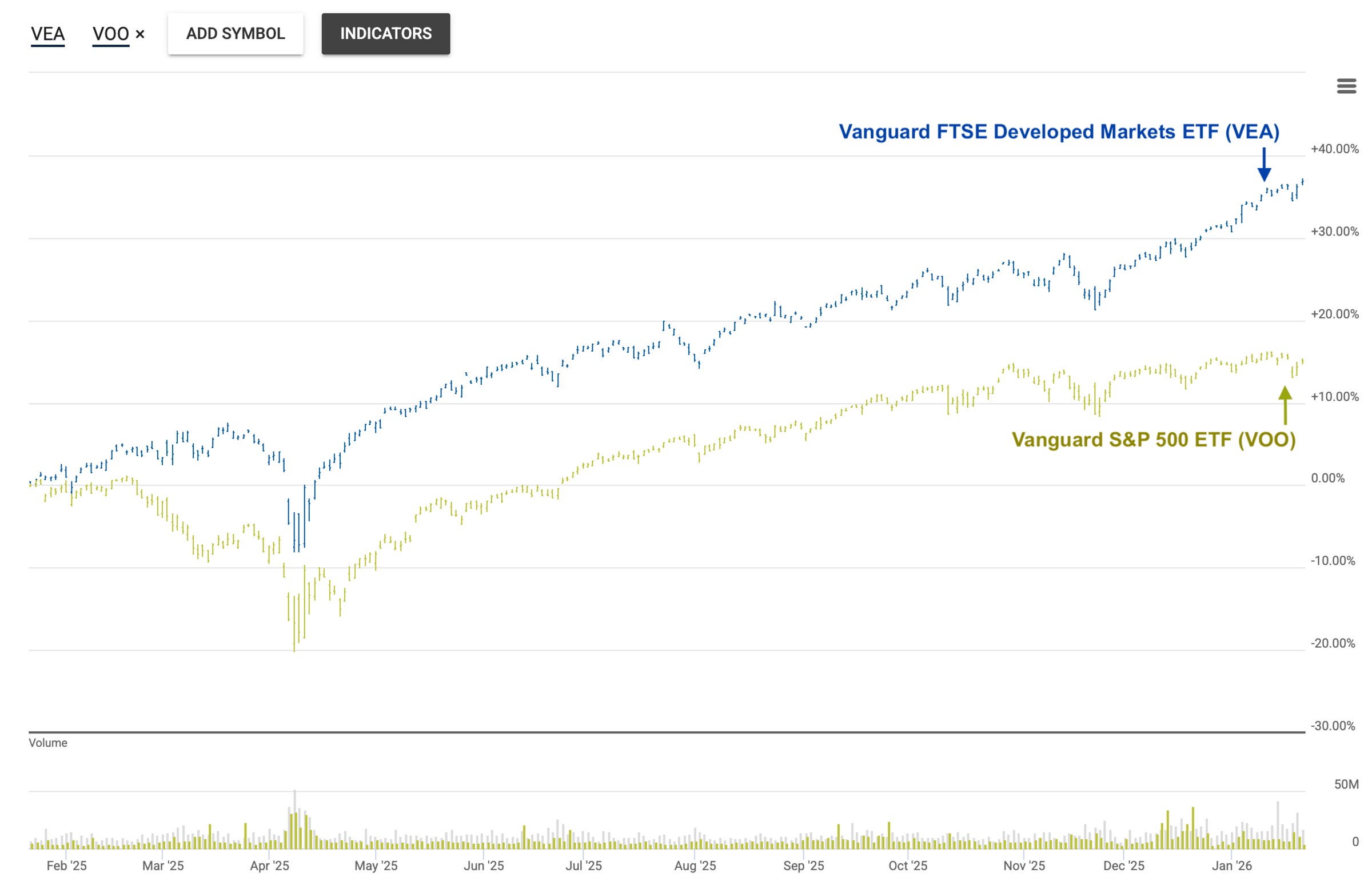
International stocks outperformed U.S. stocks last year for just the third time over the last 10 years. Credit the weaker U.S. dollar along with economic growth in foreign countries.
Since the chart below doesn’t start on January 1, 2025, I’ll share the return figures. The Vanguard FTSE Developed Markets ETF (VEA) jumped by 35.1% last year. The domestic Vanguard S&P 500 ETF trailed with a still good 17.8% return.
Momentum May Help Gold Keep Glittering
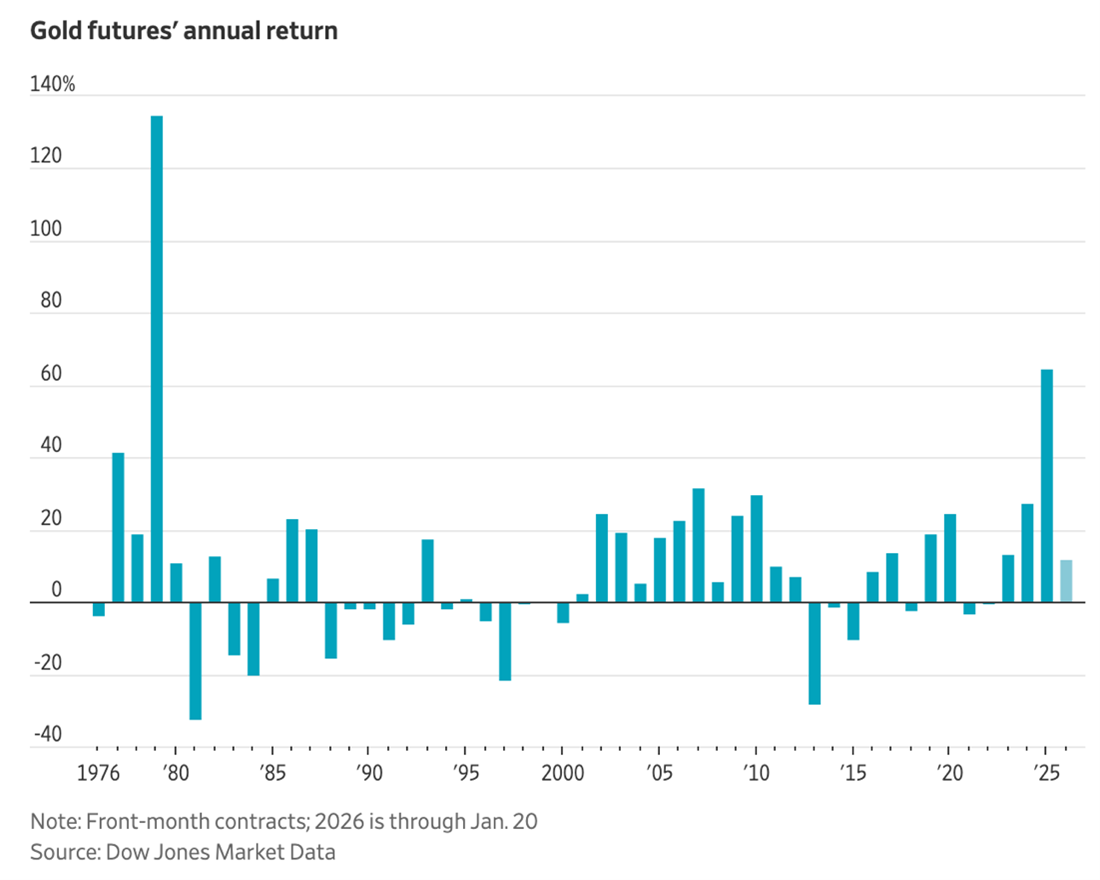
“In five of the six years before 2025 that gold futures rose by at least 20%, they climbed again the following year. And in those five years, the average increase was more than 15%,” reported The Wall Street Journal yesterday. The newspaper credited Citi analysts for the data.
I’ll add that price momentum has been found to exist in many different types of assets.
Reports of the Dollar’s Death Are Exaggerated
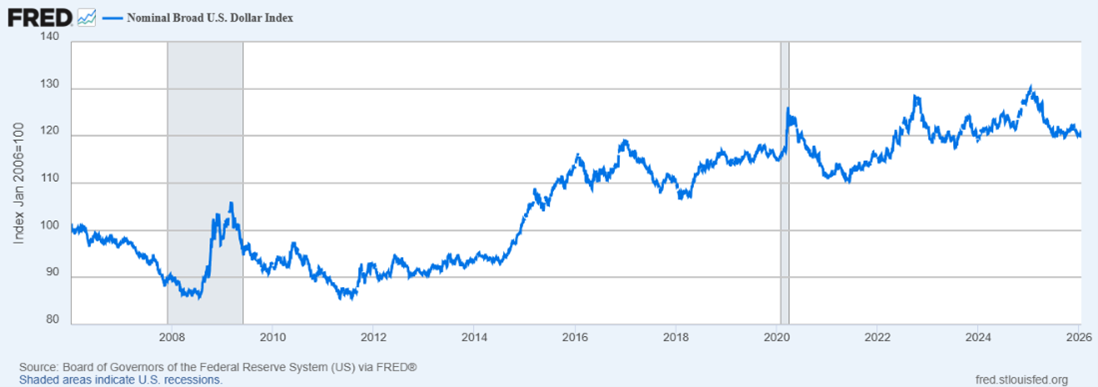
Soaring gold prices and increased geopolitical uncertainty have led to chatter about the U.S. dollar’s demise. While the greenback did weaken against a basket of currencies last year, it remains historically strong. As you can see in the chart below, the U.S. dollar has consistently traded at a premium for 11 consecutive years.
This isn’t to say there aren’t problems. One could rattle off a long list of U.S. fiscal issues. But other countries are having problems too. Plus, there isn’t a universally strong candidate to replace the U.S. dollar as the world’s reserve currency.
Cocoa Prices Are at a Two-Year Low
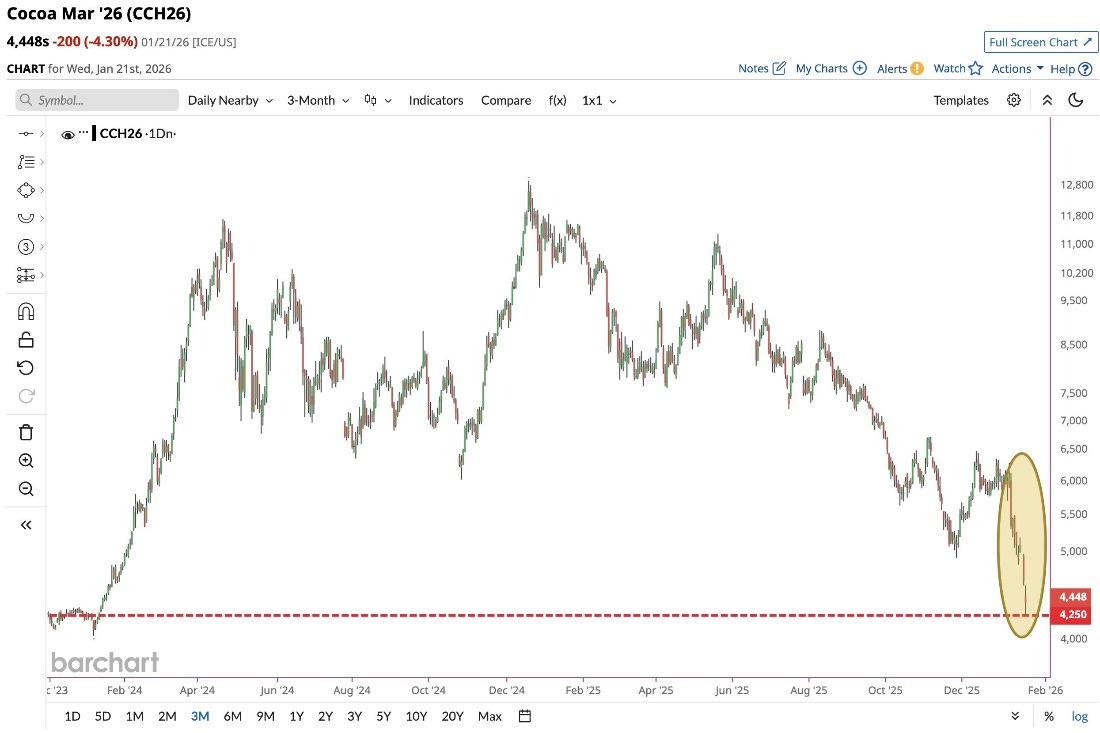
Chocolate lovers, rejoice! Cocoa prices hit a two-year low yesterday. Barchart cited two primary reasons for this. First, demand is “tepid,” with both European and Asian cocoa grindings down. (Grindings are a measure of how much cocoa is being processed.) Second, inventories are expected to rise thanks to improving conditions in key cocoa-producing West African countries.

More on AAII.com
Diversifying Your Dividends for Yield and Growth
Dividend investors can enhance yield, support growth and reduce risk by diversifying across sectors.Freedom-Focused Emerging Markets Fund Taps Into Local Growth
Freedom weighting results in lower autocracy risk and more sustainable growth in emerging markets.A One-Page Plan for Simplifying a Late-in-Life Portfolio
The January 2026 AAII Journal shows how the PRISM Wealth-Building Process provides a framework for thinking through what simplification looks like for you.
AAII Sentiment Survey
Optimism among individual investors about the short-term outlook for stocks decreased in the latest AAII Sentiment Survey. Meanwhile, both neutral sentiment and pessimism increased.
Bullish sentiment, expectations that stock prices will rise over the next six months, decreased 6.3 percentage points to 43.2%. Bullish sentiment is above its historical average of 37.5% for the eighth time in 11 weeks.
Neutral sentiment, expectations that stock prices will stay essentially unchanged over the next six months, increased 1.8 percentage points to 24.1%. Neutral sentiment is below its historical average of 31.5% for the 79th time in 81 weeks.
Bearish sentiment, expectations that stock prices will fall over the next six months, increased 4.5 percentage points to 32.7%. Bearish sentiment is above its historical average of 31.0% for the 47th time in 52 weeks.
The bull-bear spread (bullish minus bearish sentiment) decreased 10.8 percentage points to 10.4%. The bull-bear spread is above its historical average of 6.5% for the 12th time in 51 weeks.
This week’s special question asked AAII members what their performance forecast for the S&P 500 index is in 2026.
Here is how they responded:
Up 10% or more: 25.6%
Up between 2% and 9%: 43.5%
Flat between +1% and –1%: 12.1%
Down between 2% and 9%: 10.3%
Down 10% or more: 7.2%
This week’s Sentiment Survey results:
Bullish: 43.2%, down 6.3 points
Neutral: 24.1%, up 1.8 points
Bearish: 32.7%, up 4.5 points
Historical averages:
Bullish: 37.5%
Neutral: 31.5%
Bearish: 31.0%
See more Sentiment Survey results.